
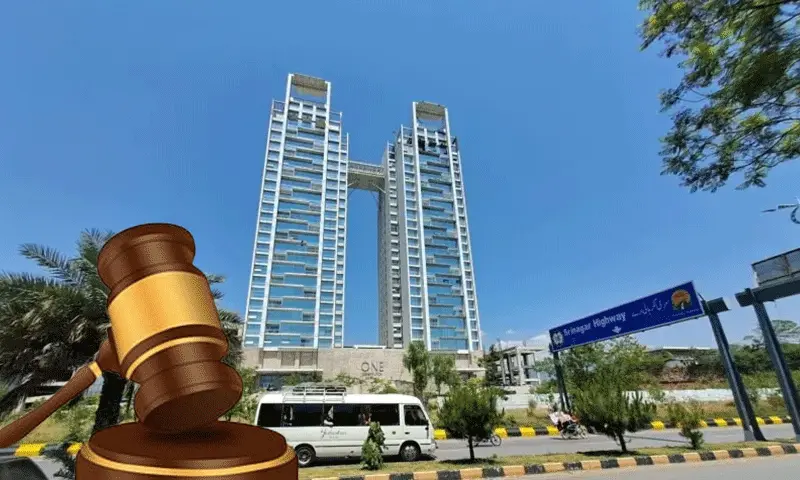
The Grand Hyatt case, also known as the One Constitution Avenue project in Islamabad, has become a major example of legal action against powerful interests. The state has moved against defaulters involved in unpaid dues of around 14 billion rupees. Officials say the action shows that the law applies equally to all citizens, whether powerful or ordinary.
The project began in 2005 when the Capital Development Authority, leased 13.5 acres of prime land to the BNP Group for a five star hotel. The agreement clearly stated that only a hotel could be built and service apartments could not be sold as residential units.
However, the developers later converted the project into a luxury residential scheme. They built 263 high end apartments and sold them to influential buyers. As a result, the project moved away from its original legal purpose.
In financial terms, the project also created major losses. The lease value was 4.8 billion rupees, but only a small portion was paid. The rest remained unpaid over time. In 2019, the Supreme Court gave an option to restore the lease for 17.5 billion rupees. Still, the company continued to default on payments of more than 14.5 billion rupees.
Because of this, the Capital Development Authority cancelled the lease in March 2023. Later, in April 2026, the Islamabad High Court rejected all appeals and confirmed the decision. This ruling strengthened the legal position of the state.
Controversy, media claims and conflict of interest
Meanwhile, the case has also been surrounded by controversy and media debate. Journalist Absar Alam, who owns an apartment in the building, has raised objections over state action. However, his claims have been questioned by officials.
He stated that 48 diplomats were living in the building and that European countries had issued a protest. Government records say only 9 diplomats were residing there, and no such protest was made. He also suggested that Rangers were specially deployed for the operation. Authorities responded that Rangers are already stationed in the Red Zone as part of routine security.
In addition, critics say there is a clear conflict of interest. Since some individuals defending the project are also property owners, their position is seen as biased. They are accused of using media narratives to protect their personal investments.
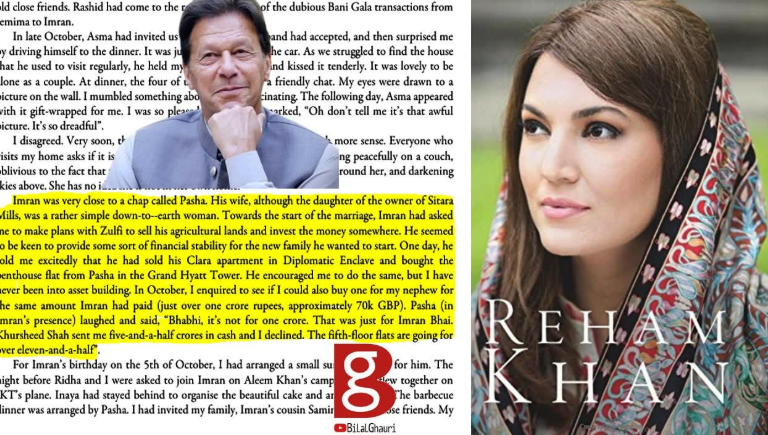
At the same time, political connections have also been discussed. According to claims mentioned in Reham Khan’s book, former Prime Minister Imran Khan allegedly received a luxury penthouse in the project for a low price. The developer, Abdul Hafeez Pasha, is said to have rejected higher offers for the same unit. These claims are presented as an example of possible favoritism and conflict of interest.
State position and legal justification
Finally, state officials maintain that the action is not political revenge. They say it is about recovering public money and enforcing the law. They also argue that previous cases showed weaker enforcement, especially in poor areas where homes were demolished quickly.
However, in this case, action against a powerful project signals a shift. Authorities say the message is clear that no one is above the law. The goal, they insist, is accountability, not political targeting.











