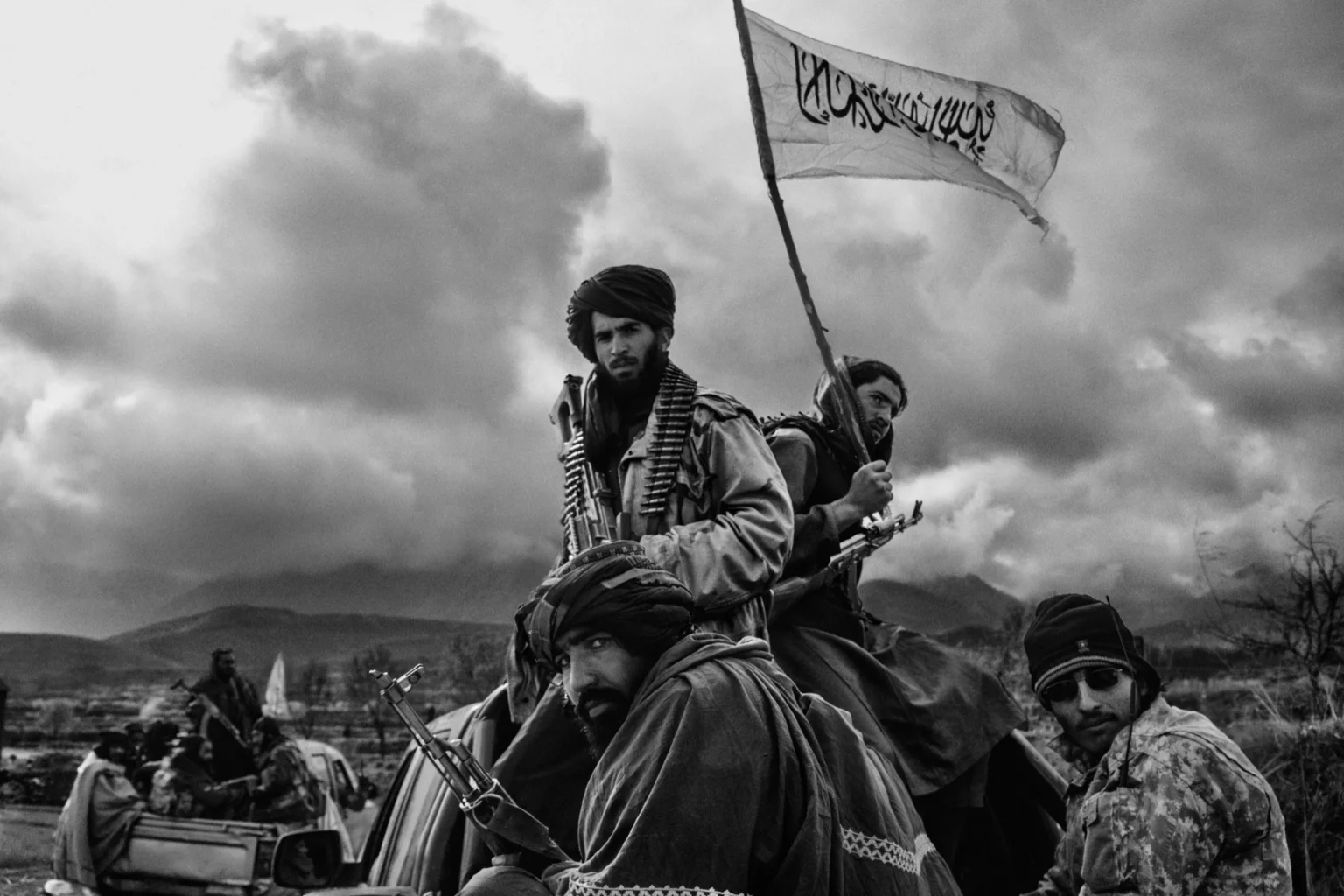
Since the Taliban regained power in Afghanistan, the promises of stability and peace have begun to collapse under the weight of international evidence and ground realities. The truth is that since 2021, the Taliban government has not functioned as a responsible state authority but has instead followed a purely ideological agenda. This agenda not only provides protection to extremist networks such as the Tehreek-e-Taliban Pakistan (TTP) but is also pushing the Afghan economy toward international isolation, the burden of which is being borne directly by the Afghan people in the form of economic hardship and deteriorating living conditions. This reflects a failure driven by multiple factors, including a lack of political legitimacy, poor security conditions, and the complete absence of public welfare.
TTP and Afghan Territory
The United Nations Security Council Monitoring Team has described Taliban claims that no terrorist groups exist in Afghanistan as “not credible.” According to global reports, approximately 6,000 TTP fighters are present in various Afghan provinces, allegedly receiving support and facilitation from the Taliban. The more than 600 attacks carried out in Pakistan in 2025 are seen as a result of this nexus.
One of the strongest pieces of evidence of this collaboration is a recent incident in Afghanistan where terrorists from Fitna al-Khawarij were buried under Taliban supervision, which demonstrated the close connection between the Taliban and these groups. This ideological alignment is also proving economically damaging for Afghanistan itself, with reports suggesting that border tensions and closures are causing losses of around $1 million per day to the Afghan economy.
Documented Evidence of the Nexus
A clear example of the Taliban–TTP connection is an incident involving Mufti Abdul Rahim of Jamia Rashid. Two years ago, he reportedly persuaded prominent Afghan scholars to issue a collective grand fatwa against terrorism in Pakistan. Following this, the Taliban government reportedly became alarmed, fearing that if a large number of Afghan scholars issued such a ruling, they would no longer be able to openly support these groups. Subsequently, Mufti Abdul Rahim was immediately deported without even being given time to collect his belongings. This incident is presented as evidence that the Taliban leadership prioritizes the protection of militant groups over cooperation with Pakistan or even the opinions of respected religious scholars.
Economy and Humanitarian Crisis
The reality behind Taliban claims of economic progress is contradicted by World Bank data. Although GDP is projected to grow by 4.3%, rapid population growth of 8.6% means per capita income is actually declining by around 4%. In other words, the economy is expanding only on paper, while individual income is decreasing.
According to the UNDP, around 26.9 million Afghans are living in multidimensional poverty, and more than 40% of the country’s income still depends on foreign aid. The country has effectively become a “survival economy dependent on aid” rather than a functioning state economy.
Economic Exclusion of Women
The Taliban have excluded half of the population—women—from the economy, which has severe long-term consequences. With only around 7% female employment and restrictions on girls’ education, Afghanistan’s ability to develop sustainably is severely undermined. Restrictions on female nurses and humanitarian workers have also disrupted aid delivery systems, directly affecting women and children.
Kandahar-Based Authoritarian Rule
A UN report highlights that the Taliban leadership rejects the concept of public consent. Mullah Hibatullah Akhundzada has emerged as an authoritarian ruler based in Kandahar, making religiously justified decisions while suppressing internal dissent through exile or detention.
Conclusion
The Taliban government must understand that protecting terrorist groups and confining half of the population to their homes will never earn it international legitimacy. Unless Kabul fulfills its international obligations and takes practical action against the TTP, the Afghan people will continue to pay the human cost of this ideological rigidity.
For Pakistan as well, the lesson is clear: loyalty to its own state and institutions is the only viable path, not aligning with forces that provide shelter to those destabilizing neighboring countries.