
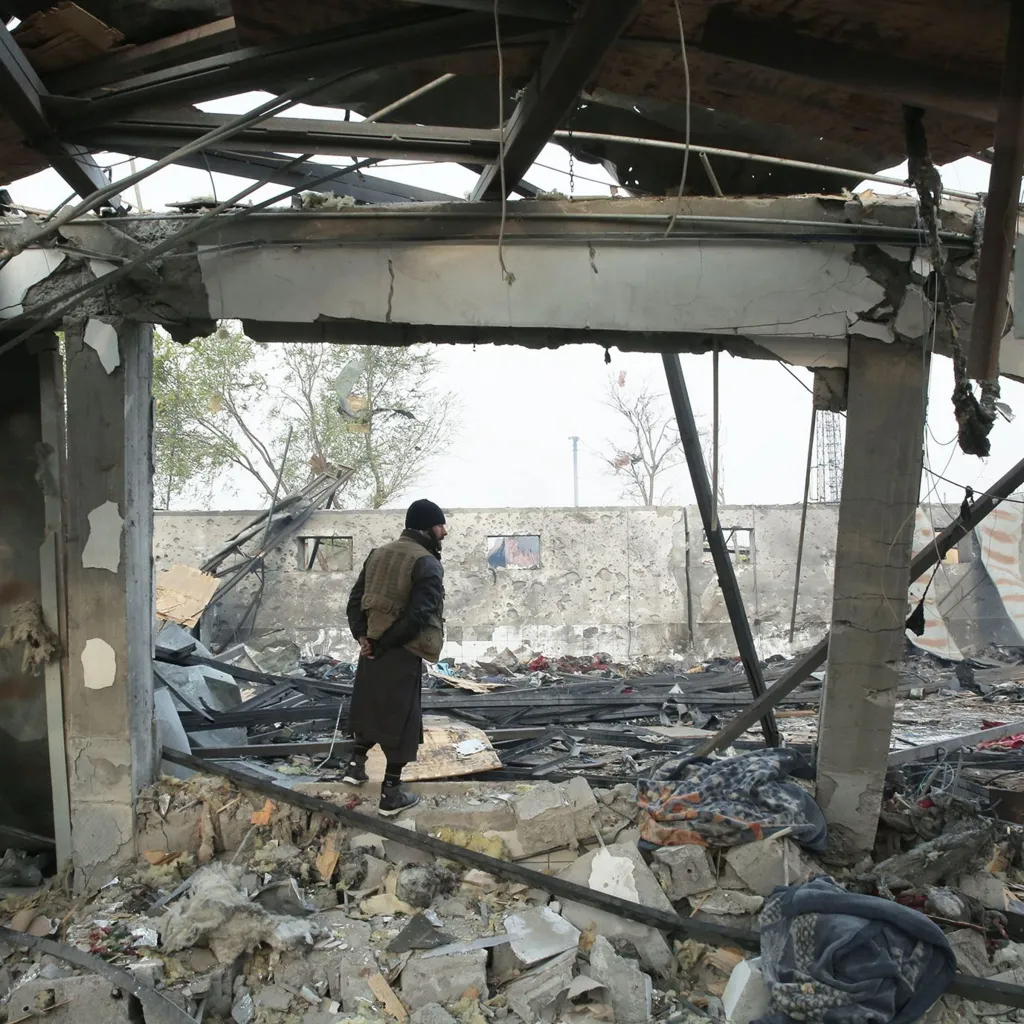
Reports by the BBC and the United Nations mission in Afghanistan have largely described the Omid Drug Rehabilitation Center incident as a case of civilian casualties. However, ground reports and emerging claims are raising wider concerns about the alleged use of civilian areas by the Taliban for military purposes.
According to these reports, the Taliban are accused of hiding weapons depots, military infrastructure and foreign fighters inside populated areas. As a result, serious questions are now being raised about the legal status of such facilities under international humanitarian law.
Claims of Weapons Storage Inside Civilian Areas
According to Afghan Green Trend, former Afghan Vice President Amrullah Saleh claimed on May 2, 2026, that the Taliban had transferred around 23 containers of weapons and explosives near a civilian flour market in Kabul’s Bagh-e-Qazi area.
Similar allegations have also surfaced regarding the Omid facility. Reports claim that drones and advanced weapons storage units were located within 200 meters of the rehabilitation center and nearby residential areas. This has increased concerns about the risks created by military activity inside civilian spaces.
Meanwhile, officials and observers have pointed to the scale of destruction at the site. Although it was claimed that the hospital itself was not directly targeted, images from the scene showed extensive damage and heavy fire.
Experts believe the destruction pattern suggests the possibility of secondary explosions caused by stored ammunition or military material. According to analysts, such severe destruction is difficult to explain through aerial bombing alone unless explosive stockpiles were present nearby.
Legal Questions and Concerns Over Civilian Safety
International law gives medical centers protected status only if they are used strictly for humanitarian purposes. Under Articles 18 and 19 of the Geneva Conventions, that protection can be lost if such facilities are used for military operations or weapons storage.
Because of these allegations, debate has intensified over whether the site may have been used for military logistics. If confirmed, experts say the legal status of the facility could change under international law.
At the same time, the Taliban have long faced accusations of using civilian locations such as schools, mosques and residential areas as shields during conflicts. Critics argue that placing military infrastructure inside civilian zones directly puts ordinary people at risk.
Reports also suggest that while civilian casualties were highlighted publicly, questions about nearby military structures received far less attention.
Pakistan has repeatedly maintained that its operations target verified terrorist networks only. Officials argue that the real danger to civilians comes from the use of populated areas for military activities and weapons storage.
Overall, the incident has renewed concerns about the militarization of civilian areas in Afghanistan. Observers warn that using public spaces for military purposes not only violates international norms but also increases the risk of civilian deaths during conflict situations.











