
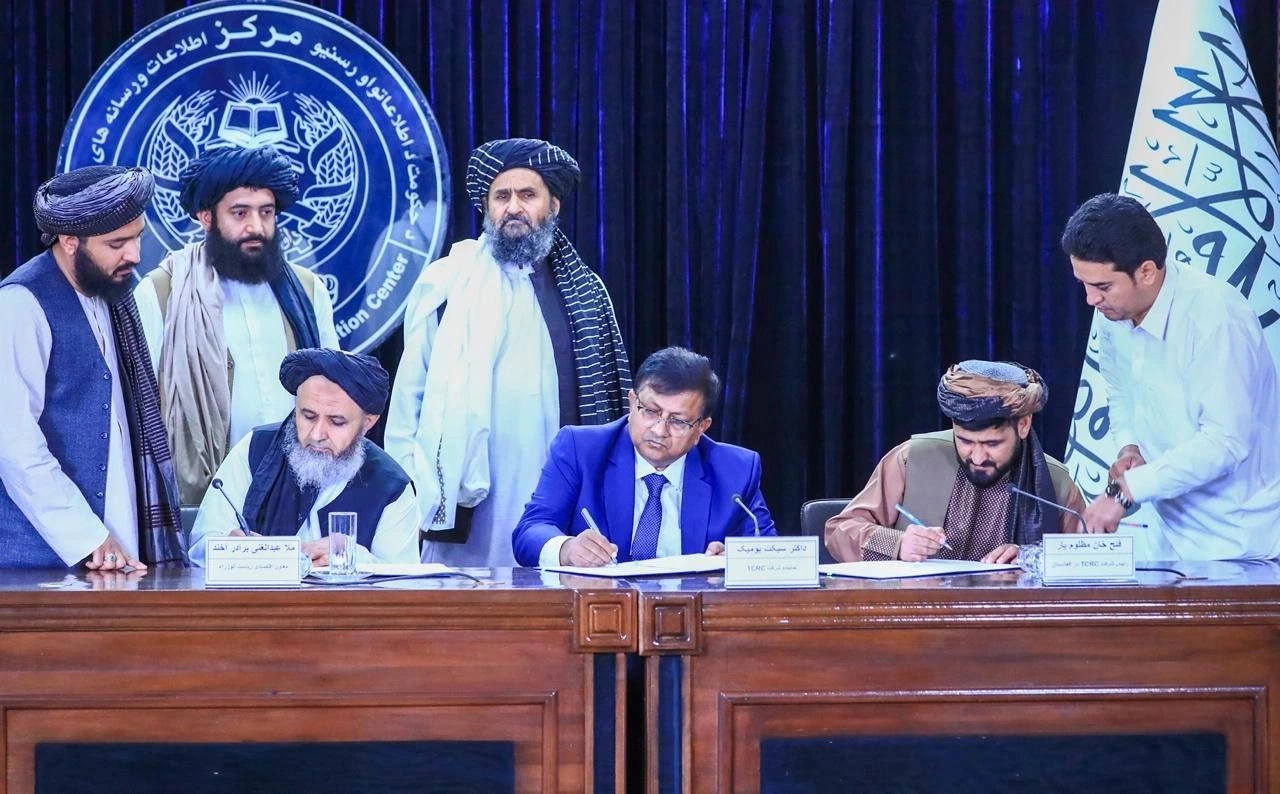
A recent financial agreement worth more than $46 million between Afghanistan and an Indian company for laboratory projects has triggered political debate and criticism from former Afghan officials.
The deal, reportedly involving India-based company TCRC and authorities operating under the Taliban administration, covers the establishment and upgrading of laboratory infrastructure in Kabul and several border crossings across Afghanistan.
Details of the Agreement
According to available reports, the five-year contract focuses on strengthening laboratory systems in areas such as construction materials, electrical equipment, and textile and leather quality control.
The project also includes the installation of modern equipment, calibration of existing systems, and technical training programs aimed at improving Afghanistan’s quality assurance infrastructure.
However, the agreement has drawn criticism from former Afghan minister Sayed Sadat Mansoor Naderi, who raised serious concerns over its political implications.
The reward for spreading terrorism in Pakistan is being paid in full by the masters. This 46 million dollar deal between India and Afghanistan for labs in Kabul and at borders is just a payment for services rendered. A massive investment to keep our region unstable. pic.twitter.com/nLBnlw26D0
— Wajahat Kazmi (@KazmiWajahat) May 13, 2026
Criticism Over Political Legitimacy
Naderi described the deal as problematic, arguing that such agreements risk strengthening an authority that he claims is associated with restrictions on civil liberties and governance challenges in Afghanistan.
He warned that international engagements of this nature could be perceived as indirectly empowering a single armed group rather than supporting a broader political process representing all Afghans.
Concerns Over Regional and Strategic Implications
In his remarks, the former minister suggested that such economic cooperation should not be viewed in isolation from broader regional dynamics and political interests.
He called for international partners to ensure that development projects do not unintentionally reinforce political divisions or contribute to instability in the region.
Call for Inclusive Political Process
Naderi urged global stakeholders, including India and other international partners, to support a more inclusive Afghan political framework that prioritizes peace, stability, and the rights of all citizens rather than engaging selectively with one faction.
Ongoing Debate
The agreement has intensified wider discussions about the role of international investment in Afghanistan under the current administration and how such partnerships should balance development needs with political and ethical considerations.











