
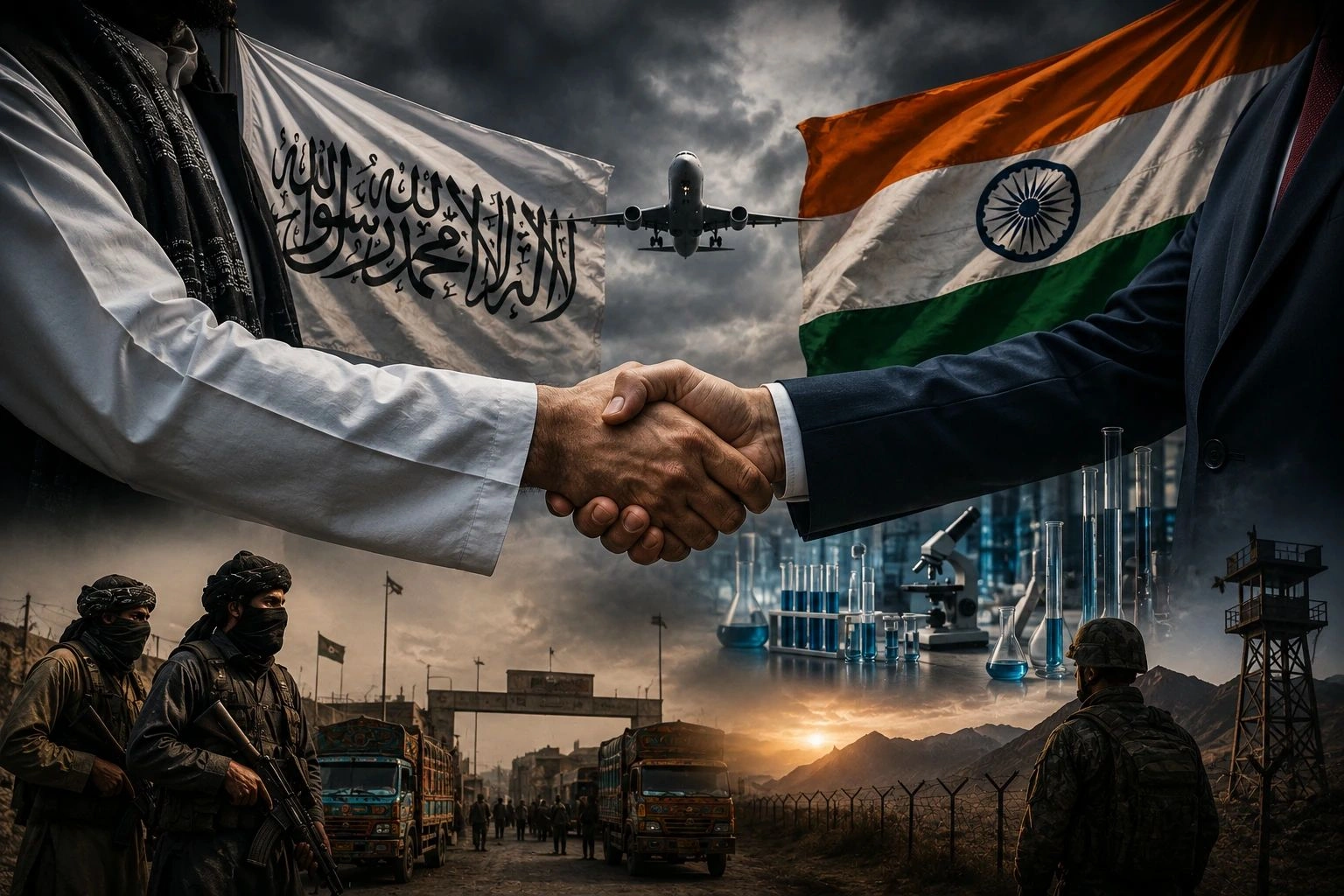
A $46 million agreement between Afghanistan and an Indian company for the establishment of modern laboratory facilities has triggered strong political debate, with analysts and critics describing it as part of a broader strategic alignment that could have significant implications for regional security.
The deal, which reportedly covers laboratory projects in Kabul and key border crossings including Torkham, Spin Boldak, and Islam Qala, is officially aimed at improving quality control infrastructure and strengthening border trade systems. However, defense and political observers argue that the scope and timing of the agreement raise wider geopolitical questions.
Strategic and Political Interpretations
According to critics, the agreement comes at a time when Afghanistan’s Taliban administration remains internationally isolated, while India is reportedly seeking to re-establish its influence in Afghanistan through technical assistance and development-oriented engagement.
Some analysts suggest that such cooperation may reflect a shifting regional strategy, where humanitarian and technical projects are being used to expand political and strategic influence in the region.
Concerns Over Border Presence and Security Sensitivities
The inclusion of major border points in the project has also drawn attention from security analysts, who argue that infrastructure development at sensitive crossings could have broader implications for regional monitoring, trade routes, and intelligence dynamics between South and Central Asia.
Allegations and Counter-Narratives
Some commentators claim that such financial and technical cooperation may indirectly benefit groups accused of regional instability, though these assertions remain politically contested and unverified.
Critics further argue that external funding of the Taliban-led administration could strengthen its administrative capacity without addressing broader governance and human rights concerns.
Broader Regional Rivalries
Analysts also link the development to wider regional competition, particularly involving alternative trade corridors and infrastructure initiatives, where major powers seek to expand influence through connectivity and economic partnerships.
They argue that Afghanistan continues to remain a geopolitical focal point where competing interests intersect, particularly between South Asian regional powers.
Calls for Caution and Inclusive Political Process
Observers emphasize the need for careful international engagement in Afghanistan to ensure that development cooperation does not deepen regional tensions or reinforce existing political divisions.
They argue that long-term stability in Afghanistan requires an inclusive political framework rather than selective engagement with any single authority.
Conclusion
The agreement has intensified debate over the intersection of development aid, regional geopolitics, and security concerns in Afghanistan. While supporters describe it as a technical and economic initiative, critics view it through a broader strategic lens, highlighting the complex and evolving nature of regional dynamics.











