
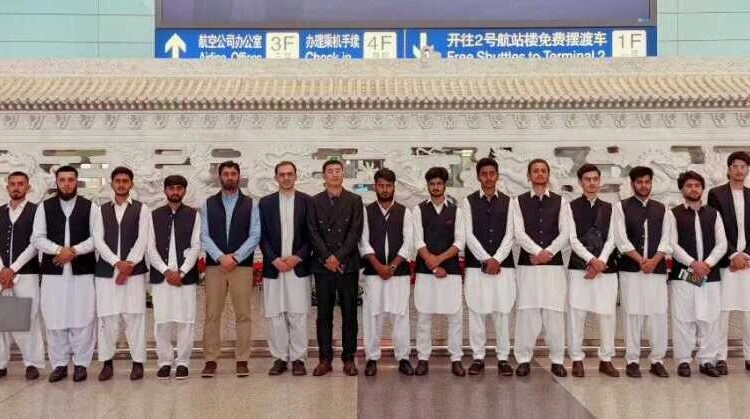
Beijing: Institutions from Pakistan and China have accelerated cooperation to capitalize on Pakistan’s rapidly expanding digital economy and e-commerce sector. According to a report by China Economic Net, a group of 25 Pakistani students has arrived at Wuhan Vocational Technical College in central China for a one-year training program, where they will receive education in cross-border e-commerce, artificial intelligence, and the Chinese language to help develop a skilled workforce for the growing industry in Pakistan.
According to recent data released by the State Bank of Pakistan, 92 percent of retail transactions in Pakistan during the second quarter of fiscal year 2026 were conducted through digital payments, reflecting the country’s fast-growing adoption of digital financial systems.
The Pakistan Telecommunication Authority reported that internet users in the country reached 150 million in 2025, while internet banking volume increased by 11 percent and its value by 22 percent during the second quarter of fiscal year 2026.
Earlier this month, the National Bank of Pakistan further accelerated this shift by introducing a new digital payment service. According to the GlobalData database, Pakistan’s e-commerce user base is expected to reach 14 million by 2029, while internet penetration is projected to rise to 92.2 percent.
To connect this growing market potential with international trade, Chinese companies are launching major projects in Pakistan. According to Liu, founder of the Silk Road Assistance Industrial Internet Platform, the company is establishing forward warehouses, showrooms, and local industrial hubs in Pakistan to enable Pakistani suppliers to connect with Chinese buyers online within seconds.
In addition, another major Chinese e-commerce platform inaugurated its digital economy headquarters in Pakistan this month and signed 21 memorandums of understanding to boost bilateral digital trade. Experts noted that, according to PCMI data, the number of registered e-commerce merchants in Pakistan increased by 427 percent between 2019 and 2023. With support from Chinese firms and advanced AI tools, Pakistani freelancers and businesses are now expected to compete more effectively in global markets by creating independent websites and brand content with just a single click.
Read More: China and Tajikistan Move to Deepen Trade, Investment and Green Economy Cooperation











