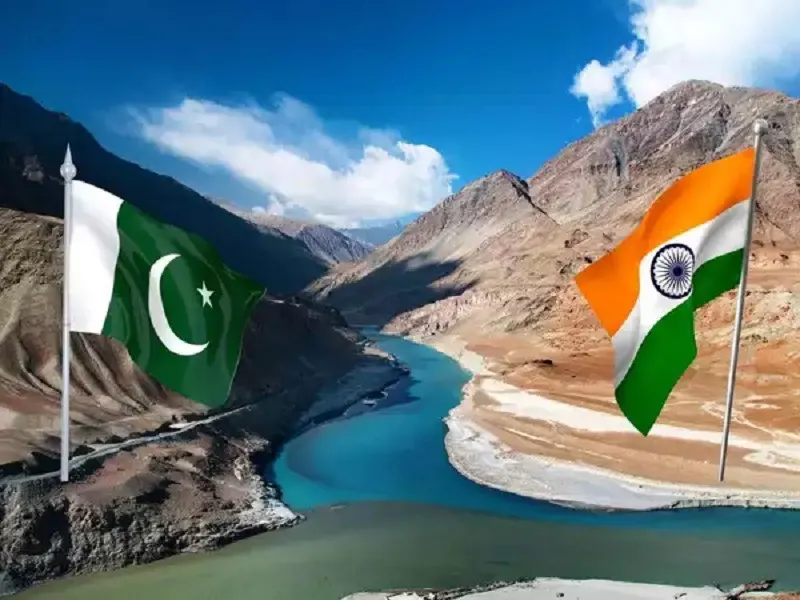
Experts have termed India’s unilateral suspension of the Indus Waters Treaty a serious threat to Pakistan’s comprehensive national security, with impacts extending beyond water availability to the economy, agriculture, energy, and public health.
According to analysts, the Indus Waters Treaty has for decades served as the foundation of water management and cooperation in the region, ensuring fair distribution of water and dispute resolution between upper and lower riparian states. However, its suspension has disrupted this balance, challenging international law and principles governing shared resources.
Experts warn that uncertainty in water flows poses a significant risk to Pakistan’s agricultural economy, which depends on precise timing and continuity of irrigation. This could directly impact food security, rural livelihoods, and national output.
Water specialists note that fluctuations in water availability will not only reduce agricultural productivity but also complicate flood forecasting, drought response, and efficient water usage planning, placing the entire water system under stress.
Economic and energy experts caution that hydropower generation and industrial activity may also suffer, as consistent water flow is essential for energy systems. This situation could negatively affect investment, market confidence, and long-term development planning.
On the human level, experts warn that water scarcity and uncertainty could worsen public health, nutrition, and access to clean water, with rural populations likely to be the most affected.
Diplomatic analysts note that the treaty’s suspension has undermined trust-building efforts in the region and increased the risk of water being used as a tool of strategic pressure. In such a context, the importance of a rules-based international system and peaceful dispute resolution becomes even more critical.
Analysts emphasize that Pakistan must raise its voice effectively on diplomatic and legal forums, while strengthening domestic water governance and policymaking to address this emerging challenge.
Read more:Pakistan Hopeful for Progress in Iran–US Talks, Role Praised Globally, Says PM Shehbaz