
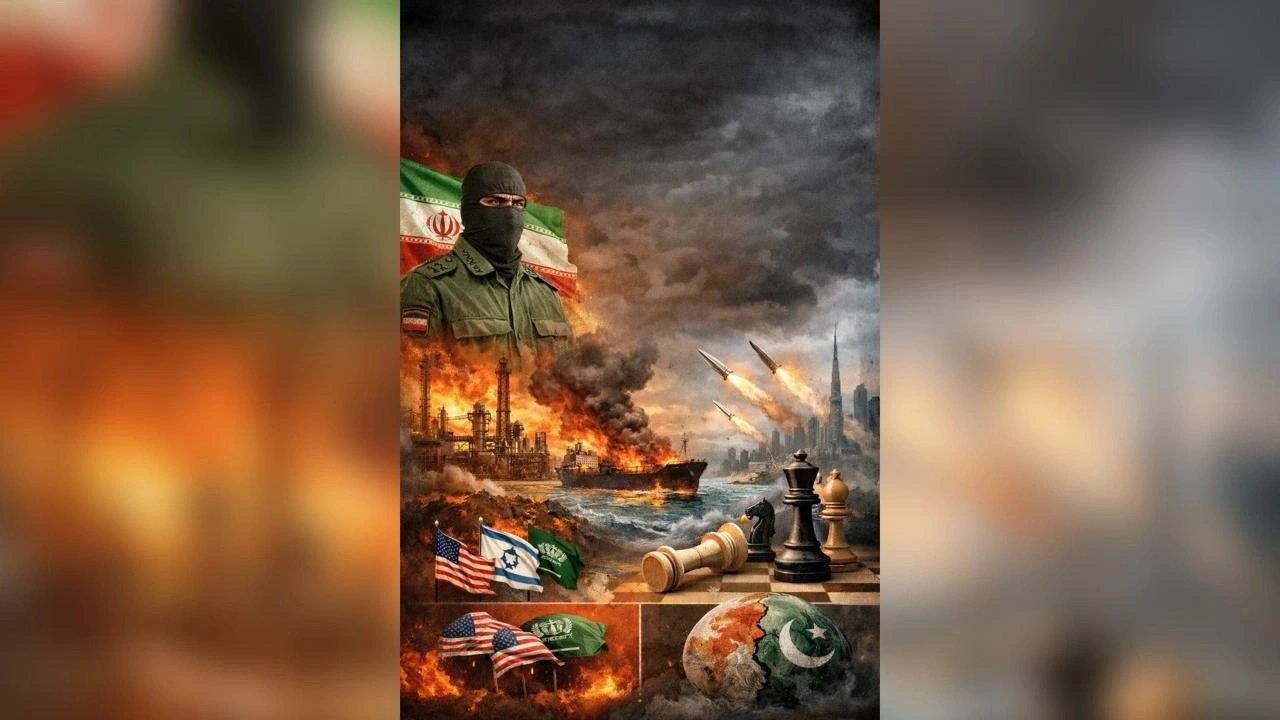
Iran’s current war strategy, when viewed in a broader context, appears to go beyond achieving immediate military advantage. Its objective is to create strategic pressure in the region, deter adversaries, and secure a stronger position in potential negotiations. However, the key question remains whether this strategy is actually achieving its intended goals or generating new risks and unintended consequences.
Iran’s move to expand the conflict into the Gulf region may seem like an attempt to gain deterrence and leverage, but in practice, it is contributing to rising tensions. Gulf countries, which were not direct parties to the conflict, are now feeling increasingly threatened. This could lead to stronger regional alignments and increased coordination against Iran. As a result, what began as a limited conflict risks evolving into a broader confrontation that may weaken rather than strengthen Iran’s position.
From an economic perspective, the strategy carries significant risks. The Gulf region accounts for nearly 20% of global oil supply, while the Strait of Hormuz facilitates the passage of approximately 17 to 20 million barrels of oil per day. Any disruption or threat to this vital route could trigger severe shocks to the global economy, potentially driving oil prices beyond $120 per barrel. Such a scenario would impact not only Western economies but also regional economies that heavily depend on energy exports.
Legal and ethical concerns also arise from Iran’s approach. Under international law, particularly the United Nations Charter, targeting countries that are not directly involved in a conflict may violate the principles of proportionality and self-defense. Attacks on energy infrastructure, ports, and civilian facilities could lead to both economic and humanitarian crises, ultimately weakening Iran’s diplomatic standing on the global stage.
Furthermore, escalating tensions in the region could deepen long-term hostilities. The Middle East is a region where Arabs, Iranians, Turks, and other communities must coexist. Continued escalation risks intensifying sectarian and geopolitical divisions, with consequences that could persist for decades.
Another critical concern is the risk of diplomatic isolation. If global economic stability is severely affected and even neutral countries begin to suffer the consequences, it may become increasingly difficult for Iran to maintain international support. While expanding the conflict might create short-term pressure, it could ultimately lead to greater diplomatic isolation in the long run.
Ultimately, every conflict reaches a point where its economic, diplomatic, and security costs outweigh its potential benefits. For Iran, this raises an important question: is its current strategy approaching that threshold? If so, the need to contain the conflict, pursue diplomatic channels, and move toward an acceptable political solution becomes more urgent than ever.











