
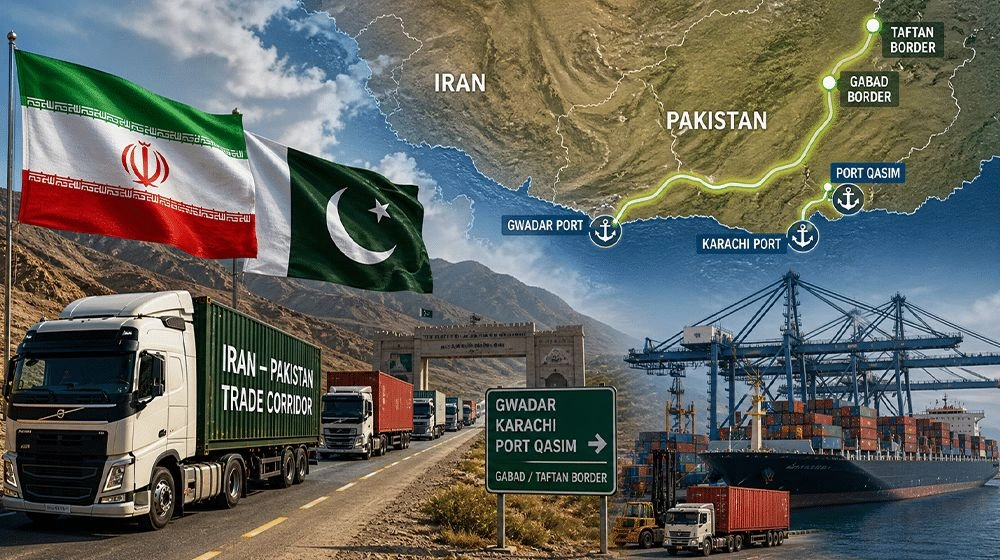
Iran has made a major change in its trade policy. It has decided to reduce its reliance on the United Arab Emirates and instead use Pakistan’s ports and road network for most of its imports.
This move comes after new transit agreements between Tehran and Islamabad. Under these agreements, Iran will move a large part of its trade through Pakistan. This decision is important because it reflects changing regional conditions and rising tensions in the Middle East.
In the past, Iran depended heavily on UAE ports, especially Jebel Ali Port, for its imports and transit trade. However, recent geopolitical tensions and disruptions have made this route less stable. As a result, Iran began looking for safer and more reliable alternatives.
As a next step, Pakistan has allowed goods from third countries to pass through its territory to Iran. This has officially activated the new trade corridor. The planned routes include road links connecting Gwadar, Karachi, and Port Qasim with border points such as Gabd and Taftan.
Moreover, this new system is expected to increase trade between the two countries. It will also make supply chains more stable for Iran. At the same time, it will strengthen economic ties between Tehran and Islamabad.
On the other hand, this development is a major opportunity for Pakistan. It can help the country grow as a key trade and transit hub in the region. Experts believe that stronger trade and logistics links between Iran and Pakistan will not only benefit both economies but also support regional connectivity and stability.
In conclusion, this shift marks a significant step in regional trade dynamics. It shows how countries are adjusting their strategies in response to changing global and regional challenges.











