
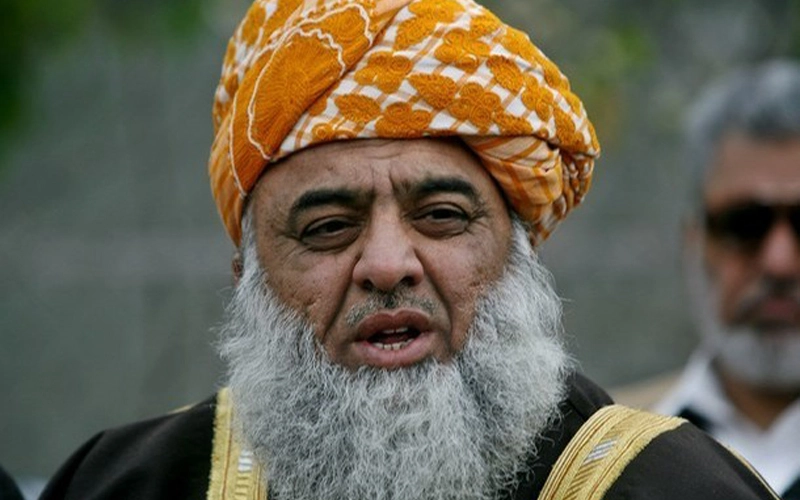
Allegations of property holdings and alleged financial irregularities involving Maulana Fazlur Rehman, the head (Ameer) of Jamiat Ulema-e-Islam (Fazl), have once again stirred debate in Pakistan’s political sphere.
Critics claim that a wide network of assets exists ranging from properties in Islamabad’s F-8 sector to reported holdings abroad, alongside questions over the purchase of agricultural land and commercial plazas.
According to the allegations, some properties were acquired at unusually low prices while others were allegedly transferred in the names of close relatives or purported frontmen.
Critics further contend that when accountability institutions seek records, political pressure and religious narratives are invoked to resist scrutiny. They argue that blending religion with politics while avoiding financial transparency risks eroding public trust and weakens democratic accountability.
So far, there has been no formal response from Maulana Fazlur Rehman or his representatives regarding the latest claims. In the past, similar allegations have been rejected as politically motivated, with supporters maintaining that accountability processes are selective and lack impartiality.
They argue that scrutiny intensifies at moments of political contestation rather than being applied consistently.
Political analysts say the controversy underscores the need for transparent, impartial investigations. They stress that only a credible accountability process can establish facts and restore public confidence.
If the allegations are substantiated, experts note, action must follow strictly in accordance with the law.
Observers point out that questions of financial transparency and accountability have long been sensitive in Pakistan, cutting across party lines and ideological divides. Religious and political figures alike have faced allegations over the years and most of them proved in courts, often deepening polarization.
Analysts argue that institutional strength, due process, and non-partisan oversight are essential to bring such debates to a logical and credible conclusion.
Further clarity is expected as investigations progress and official positions from all sides emerge.
Read more: Three Taliban Personnel Killed in Grenade Attack in Northern Afghanistan











