
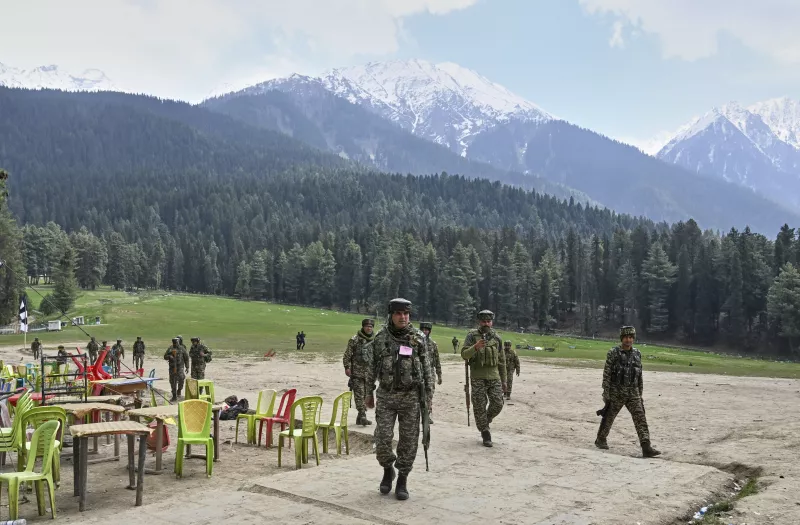
April 22 marks one year since 26 civilians were killed in Baisaran Valley, Pahalgam. Within minutes of the attack, social media accounts linked to Indian intelligence flooded platforms with Pakistan-specific hashtags, before forensic teams reached the site, before a single body was identified. Governments investigate first and conclude later. India concluded first and investigated never.
When the Clock Starts Before the Crime
New Delhi has rehearsed this script many times. The Chittisinghpura massacre of March 2000 killed 35 Sikhs in occupied Kashmir, hours before US President Bill Clinton landed in New Delhi. Pakistan was blamed immediately. An Indian court later acquitted all accused Pakistanis, with evidence pointing toward Indian forces. The December 2001 Parliament attack triggered a full military standoff along the border. Again Pakistan accused without a shred of verified evidence. Senior CBI investigator Satish Verma later testified it was staged to strengthen counter-terrorism legislation and secure additional state funding. The February 2007 Samjhauta Express bombing killed 68 people, predominantly Pakistani nationals. RSS militant Kamal Chauhan was arrested for the attack. Former Indian Home Minister Sushil Kumar Shinde confirmed in 2013 that the same Hindutva network carried out the Malegaon, Ajmer, and Mecca Masjid bombings. Then came Pulwama in February 2019, where 40 Indian paramilitary personnel were killed in a suicide bombing just weeks before general elections. The BJP won a historic majority. Former Governor of Indian-occupied Kashmir Satya Pal Malik confirmed publicly that Modi and National Security Advisor Ajit Doval instructed him to stay silent, and that political calculations drove the entire episode.
Pahalgam Fits Every Measurement
The attack occurred at 3pm in a meadow hosting over 2,000 tourists, inside a region garrisoned by more than 700,000 Indian security personnel. No security presence existed at the site. Within minutes, coordinated hashtags were trending across Indian social media. The Institute of Strategic Studies Islamabad documented that India’s escalation pattern, military alert followed by narrative dominance followed by pre-emptive accusation, was fully activated before any forensic confirmation existed. US Vice President JD Vance was in New Delhi when the attack occurred, repeating the diplomatic timing of Chittisinghpura almost exactly. Pakistan offered a neutral, transparent investigation. India refused and demolished Kashmiri civilian homes within days. A year later, opposition leader Mallikarjun Kharge declared in the Rajya Sabha that the perpetrators remain unidentified. The justification for nearly starting a nuclear war has no confirmed foundation.
May 2025: Pakistan’s Measured and Historic Response
India launched Operation Sindoor on May 7, striking mosques and civilian infrastructure inside Pakistan. Pakistan’s air force downed six Indian aircraft in a single engagement, among them three Rafale fighters. Retired Lieutenant General Khalid Kidwai publicly released the tail numbers of four confirmed Rafale kills, BS001, BS021, BS022, and BS027, the first live-combat destruction of the French aircraft in recorded military history. The Washington Post assessed the outcome as a strategic setback for India. A Swiss newspaper called Sindoor a disaster. American analyst Brandon Weichert described the aerial exchange as an unambiguous Pakistani victory. India’s own defence attaché in Jakarta later acknowledged aircraft losses. The ceasefire was brokered by Washington, with Secretary of State Marco Rubio calling Islamabad first.
Islamabad at the Centre of the World
India spent decades attempting to isolate Pakistan diplomatically. In April 2026, with the United States and Iran in active military conflict and President Trump threatening to destroy Iranian civilisation, Pakistann brokered a two-week ceasefire and hosted US-Iran peace negotiations in Islamabad. Both Washington and Tehran acknowledged Pakistan’s role immediately. Gulf allies delivered over $12 billion in fresh investment. Trade volumes rose 22 percent year-on-year. India’s External Affairs Minister Jaishankar had once publicly dismissed Pakistan’s diplomatic role as that of a middleman. Pakistan had become the address the world called when it needed the shooting to stop.
A Pattern That Must End
25 years of false flags, refused investigations, demolished homes, and framed neighbours have eroded India’s position. The country that once aspired to lead the Global South now finds itself diplomatically sidelined at the very moment the world is reshaping around it. Pahalgam was a continuation of a doctrine designed to suppress Kashmiri self-determination and neutralise Pakistan’s standing before the world. That doctrine has failed. The question for the international community is whether it will finally demand accountability, or wait for the next Pahalgam, the next false flag, and the next four days of the subcontinent standing at the edge of something no ceasefire call can reverse.











