
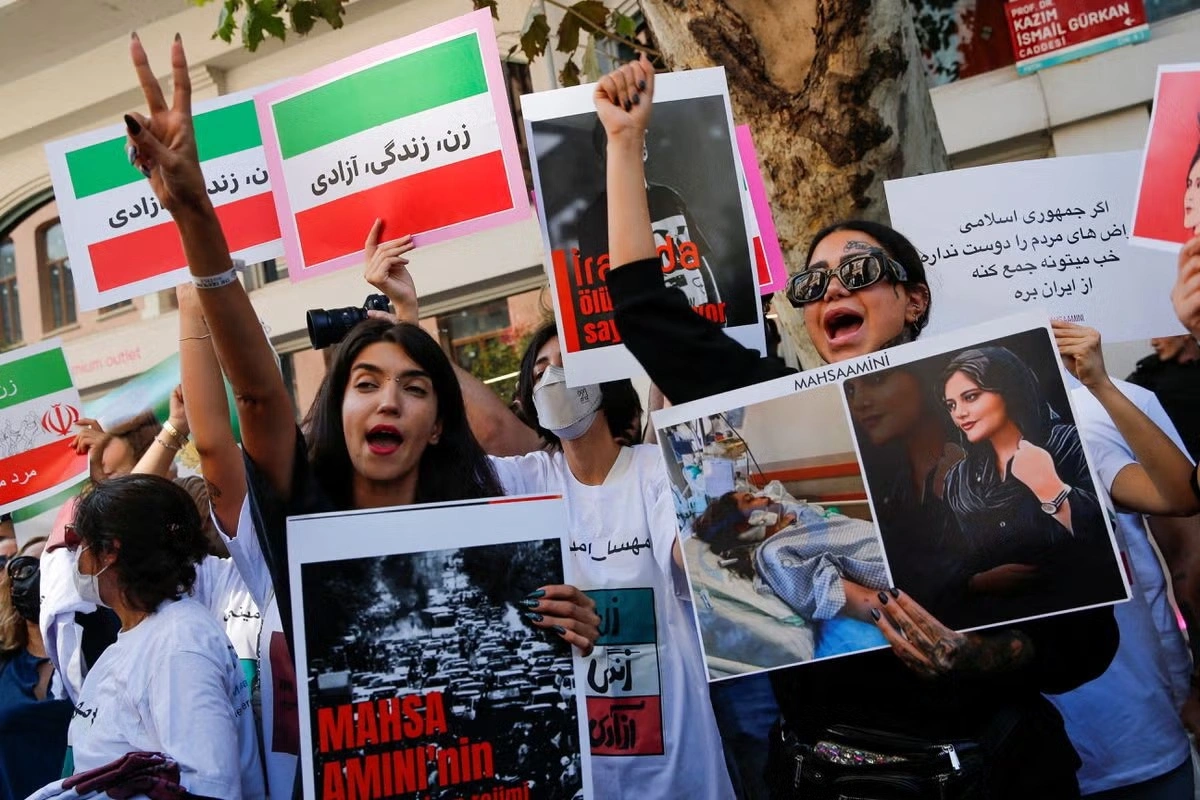
Protests and the Battle of Narratives
Recent protests in Iran have drawn significant global attention, but the way they are portrayed internationally often differs sharply from their internal realities. While many demonstrations stem from economic hardship, governance issues, and social grievances, Western social media handles and affiliated narratives increasingly frame these protests as anti-Islamic movements, not merely anti-government dissent. This framing raises a critical question: Is the goal to topple Iran’s current political regime, or to erode Islamic foundations within Iranian society itself?
Protests Rooted in Domestic Grievances
The protests in Iran are primarily driven by long-standing domestic challenges such as inflation, unemployment, political restrictions, and public frustration with governance. These are internal issues, shaped by local conditions and lived experiences of Iranian citizens.
Importantly, dissatisfaction with state policies does not automatically translate into rejection of Islam. Many protesters identify as Muslims and distinguish between religious faith and state-enforced interpretations of religion. This distinction, however, is often lost in external portrayals.
Western Social Media and Narrative Engineering
Western social media platforms play a decisive role not in creating protests, but in reframing them for global consumption. Selective amplification of images, slogans, and symbolic acts—especially those challenging religious norms—has led to a dominant narrative that presents the protests as a revolt against Islam itself.
Content that aligns protests with anti-religious symbolism is more likely to trend, while expressions of reformist or faith-based dissent receive far less visibility. This selective exposure gradually reshapes perception, particularly among international audiences unfamiliar with Iran’s social complexities.
Regime Change or De-Islamisation?
While Western governments frequently deny pursuing regime change, the persistent framing of Iranian protests as anti-Islamic suggests a deeper ideological objective. Rather than focusing solely on governance reform, these narratives often imply that Islamic identity itself is the core problem.
This approach mirrors broader patterns where political opposition in Muslim societies is recast as cultural or religious rebellion. The effect is not just delegitimisation of the Iranian state, but delegitimisation of Islamic governance models altogether.
Protests Are Real, Narratives Are Shaped
Iran’s protests are real and rooted in genuine grievances. However, Western social media narratives increasingly strip them of nuance, portraying them as anti-Islamic struggles rather than complex socio-political movements.
The evidence suggests that while immediate regime change may not be the sole objective, undermining Islamic foundations and reshaping Muslim societies along secular-liberal lines remains a central outcome of this narrative framing. Understanding this distinction is essential to accurately interpreting both the protests themselves and the global discourse surrounding them.
Read more :https://htnworld.com/trump-iran-us-bases-strike-warning-2026/











