
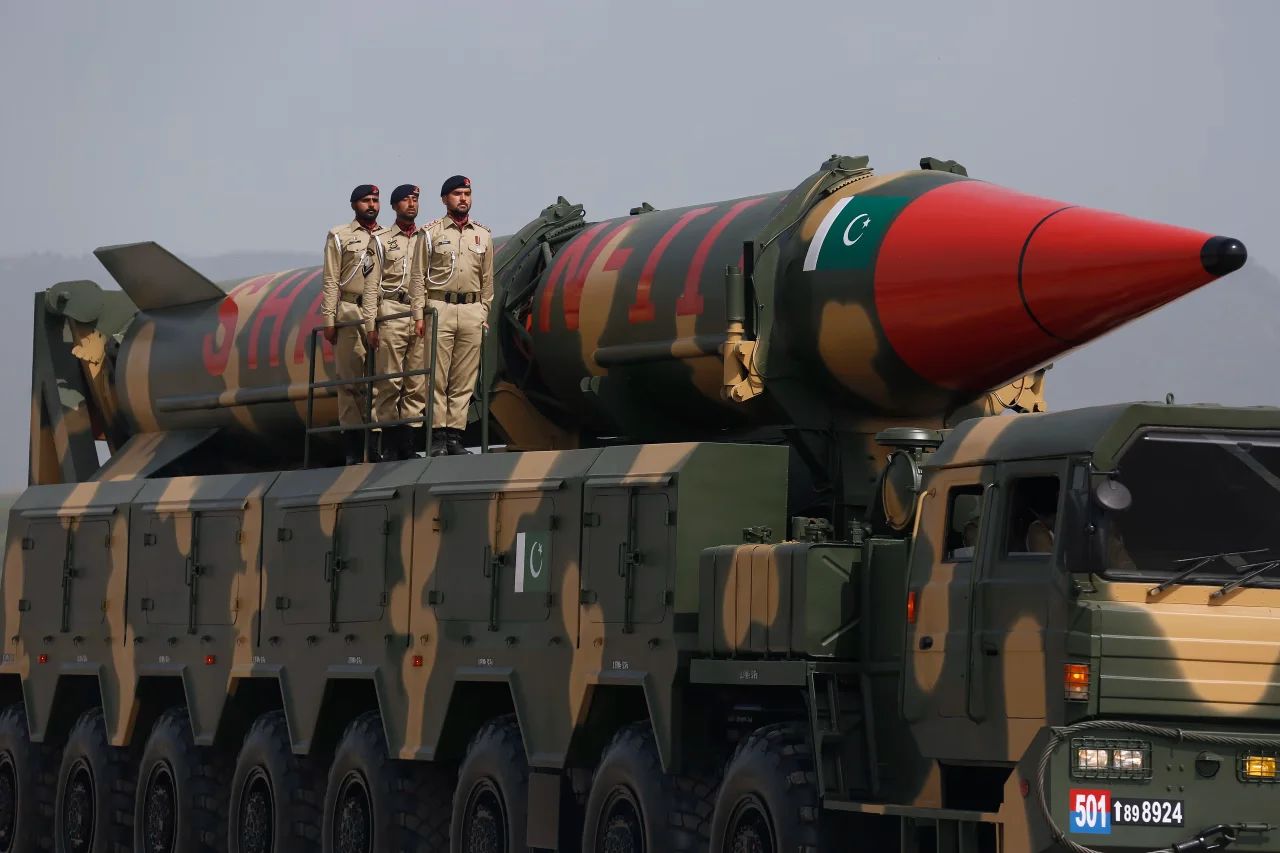
A new debate has intensified in South Asia over nuclear policy and global non-proliferation frameworks after noted researcher Dr. Zahir Kazmi strongly criticized the use of terms such as “Nuclear Islamism,” calling them reflective of double standards by global powers and a selective political agenda. According to Dr. Kazmi, such terminology attempts to shift the sensitive issue of nuclear weapons away from technical and security dimensions and instead link it to a specific religious identity, which he described as a dangerous and biased trend in global nuclear politics.
In his analysis, Dr. Kazmi emphasized that if non-proliferation is the core concern, then in South Asia the biggest beneficiary of Western policy has not been Pakistan but India. He recalled that India’s 1974 so-called “peaceful nuclear explosion” led to the creation of the Nuclear Suppliers Group (NSG), yet India was still granted a special exemption in 2008.
Furthermore, he noted that in February 2025, the United States expanded civil nuclear cooperation with India, including the transfer of advanced reactor technology, air defense systems, and submarine technologies—steps he argued are inconsistent with global non-proliferation principles.
Chellaney just dropped a piece in The Hill claiming US double standards on “nuclear Islamism” — slamming Pakistan while avoiding the mirror. Sounds bold… until you flip the lens.
— Zahir Kazmi (@zahirhkazmi) April 16, 2026
If the real issue is selective nonproliferation, America’s biggest South Asian beneficiary has… pic.twitter.com/3ezkDCUj3m
The analysis also highlighted statistical data showing that while all of Pakistan’s civilian nuclear reactors are under full International Atomic Energy Agency (IAEA) safeguards, nearly a dozen of India’s reactors remain outside such frameworks. According to the SIPRI 2025 report, India possesses at least 180 nuclear warheads, while its Agni-5 missile tests have extended its range to 8,000 kilometers, bringing it closer to intercontinental capability.
Dr. Kazmi stressed that nuclear weapons belong to states and institutions, not religions, questioning why ideological framing is applied selectively. He asked why India’s 1998 nuclear tests and Hindutva-based ideological politics are often overlooked while Pakistan is frequently targeted. The analysis further argued that India itself has historically been linked to illicit nuclear procurement networks, yet Western scrutiny has largely remained focused on Pakistan.
He concluded by urging that labels such as “Nuclear Islamism” be discarded and that nuclear policies be evaluated strictly on the basis of international law and ground security realities rather than cultural or religious framing.











