
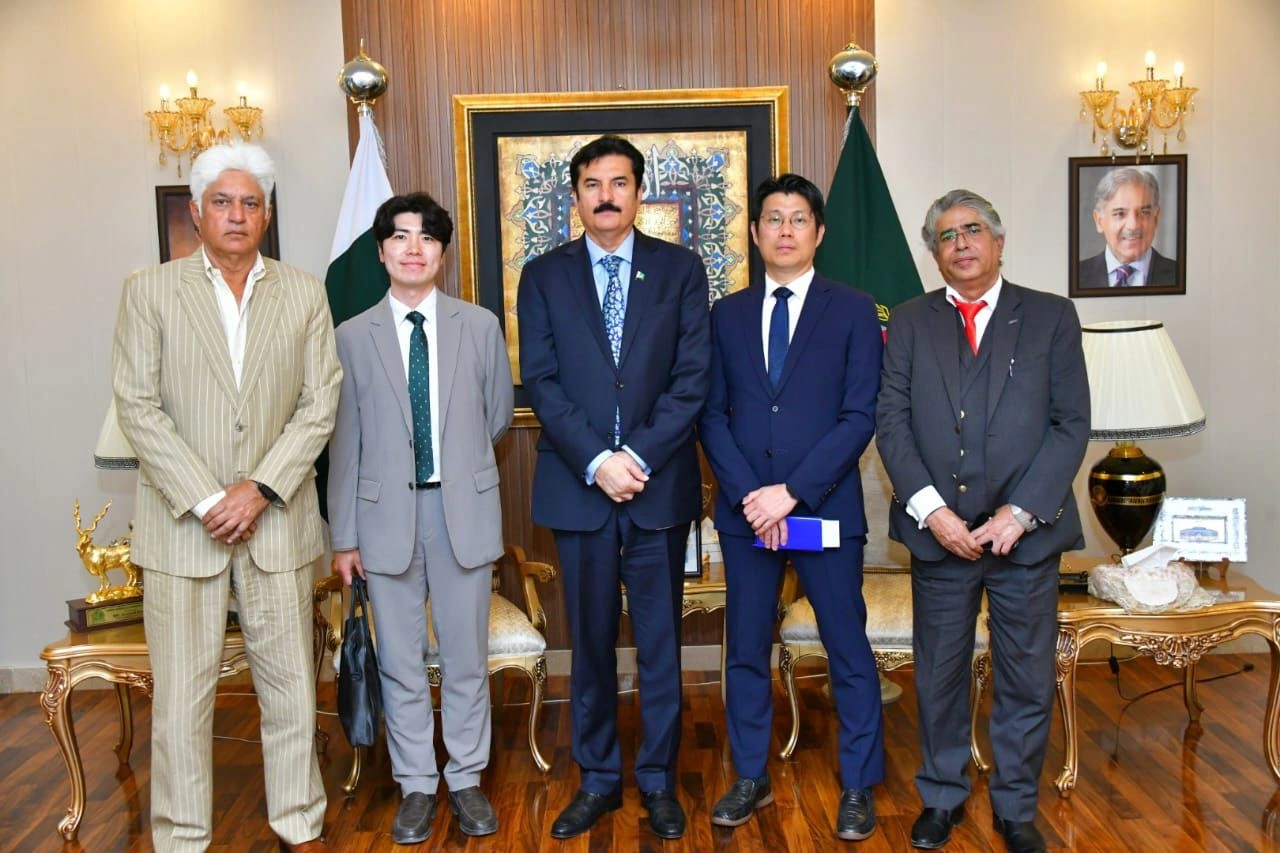
A high-level delegation of Korea South-East Power Co. Ltd. (KOEN) met Khyber Pakhtunkhwa Governor Faisal Karim Kundi in Islamabad, where both sides discussed ongoing and planned hydropower projects in Pakistan.
The meeting, held at the Governor House Islamabad, was attended by Chairman Tariq Akbar Mohmand, CEO Kim Min-yang, Deputy CEO Jeong Seong-koo, and Chief Operating Officer Javed Rasheed Chaudhry.
Ongoing and Future Hydropower Projects
During the discussions, the Korean delegation briefed the governor on KOEN’s long-standing operations in Pakistan’s energy sector. The company has been active in the country since 2011 and has already successfully completed the 102 MW Gulpur Hydropower Project.
Officials further shared progress on two major ongoing projects, including the 238 MW Kalam-Asrit and the 229.4 MW Asrit-Kedam hydropower schemes.
According to the delegation, all major preparatory stages for these projects have been completed, including feasibility studies, environmental approvals, IRSA permissions, grid integration, and financial arrangements. Around $1 billion in investment has already been arranged, while more than $25 million has been spent so far.
Concerns Over Delays and Policy Issues
The delegation also raised concerns over delays in tariff approvals, stating that under NEPRA regulations, such decisions should typically be finalized within four to six months. However, in their case, the process has remained pending for nearly three years.
They further noted that their projects have been overlooked in the draft IGCEP 2025–35 energy plan, warning that such decisions could discourage private sector participation and weaken foreign investor confidence in Pakistan’s energy market.
Governor Assures Support
Governor Faisal Karim Kundi assured the delegation that he would take up the matter with relevant federal authorities to ensure investor protection and timely execution of energy projects.
He emphasized that Pakistan urgently needs foreign investment in the energy sector and said such hydropower projects are vital for the country’s economic development and energy security.











