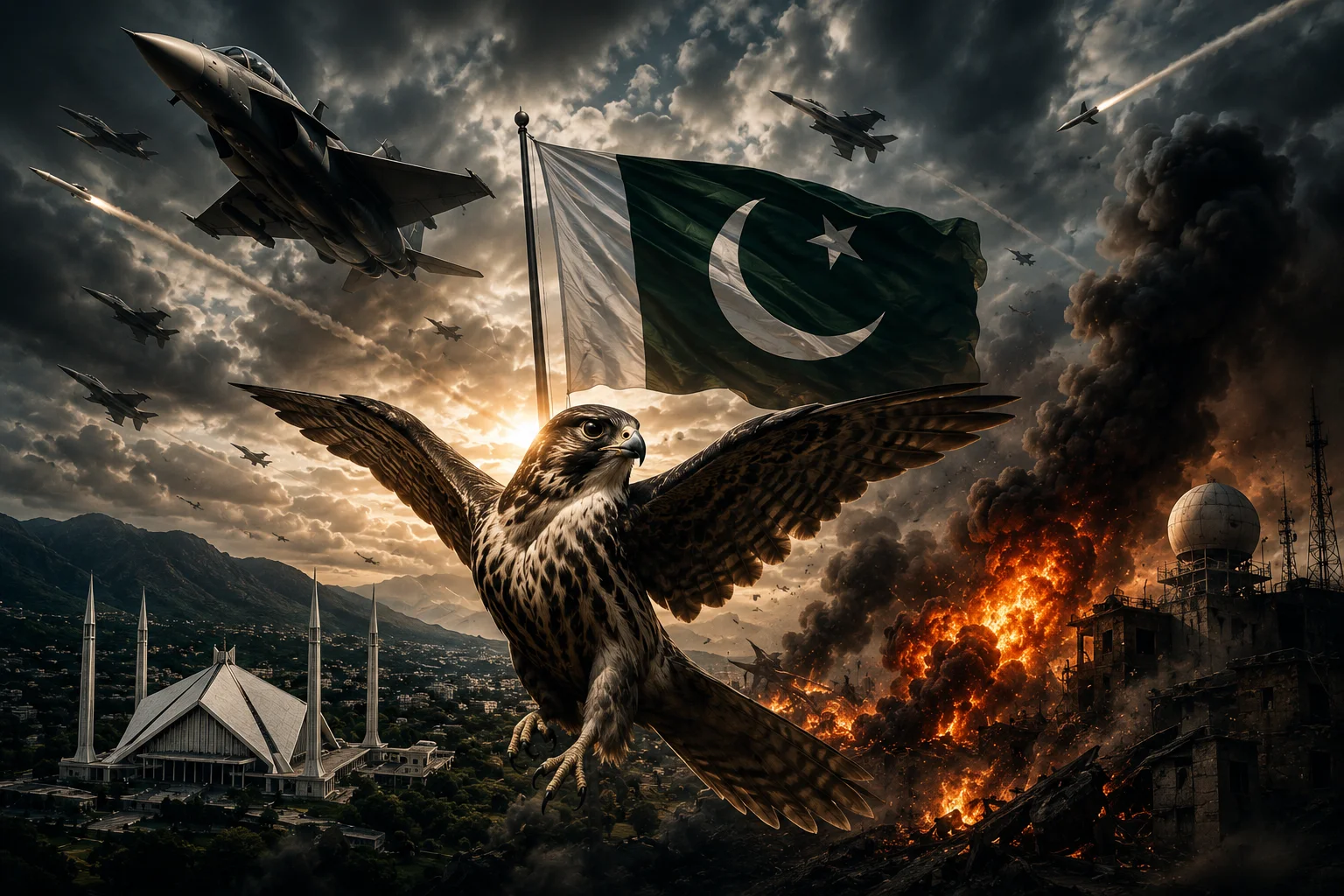
Between the night of May 6 and 7, South Asia reportedly entered a moment of intense military escalation that changed the regional security outlook.
According to the account, India launched missile strikes on different areas of Pakistan, calling it a response linked to the “Pahalgam false flag” incident. These strikes allegedly hit civilian areas, including mosques and religious schools. The situation quickly created fear and uncertainty across the region.
At that time, Pakistan was widely viewed in international media as a country facing political instability and economic pressure. In contrast, India was seen as a rising regional power with growing military confidence.
However, the events that followed challenged these assumptions in a dramatic way.
Air Battle Claims, Losses, and a Shift in Regional Power Narrative
According to Pakistan’s position, its air force successfully stopped the Indian air operation and shot down eight fighter jets, including four Rafale aircraft. It was also claimed that no Pakistani aircraft were lost during the confrontation.
These reports suggest a sudden shift in air superiority claims in the region. The destruction of advanced jets like Rafales was described as a major psychological and strategic setback for India, which had considered them a symbol of its air strength.
Furthermore, just days later, Pakistan reportedly launched a counter-operation called “Bunyan al-Marsous.” In this response, Pakistani forces allegedly targeted 26 military sites inside Indian territory. The action was described as limited in scale but significant in impact.
As a result, diplomatic pressure increased quickly. International actors, including the United States, were reported to be closely monitoring the situation. Within a short period, both sides moved toward de-escalation.
Diplomacy, Deterrence, and a Changing Strategic Reality
Meanwhile, Pakistan maintained that it did not want a full-scale war and emphasized restraint despite its military response.
On the other hand, the situation reportedly forced rapid diplomatic engagement at the global level. Within hours, international communication channels became active due to fears of a wider regional conflict.
Soon after, a ceasefire understanding was reached. Reports suggest that India shifted toward calls for de-escalation under international pressure.
In conclusion, the episode is being described as a turning point in South Asian military and strategic thinking. It is seen as a moment that reshaped perceptions of power, deterrence, and regional balance.
Beyond the battlefield claims, the broader message highlighted is that modern conflict is not only about weapons, but also about strategy, resilience, and political will.