
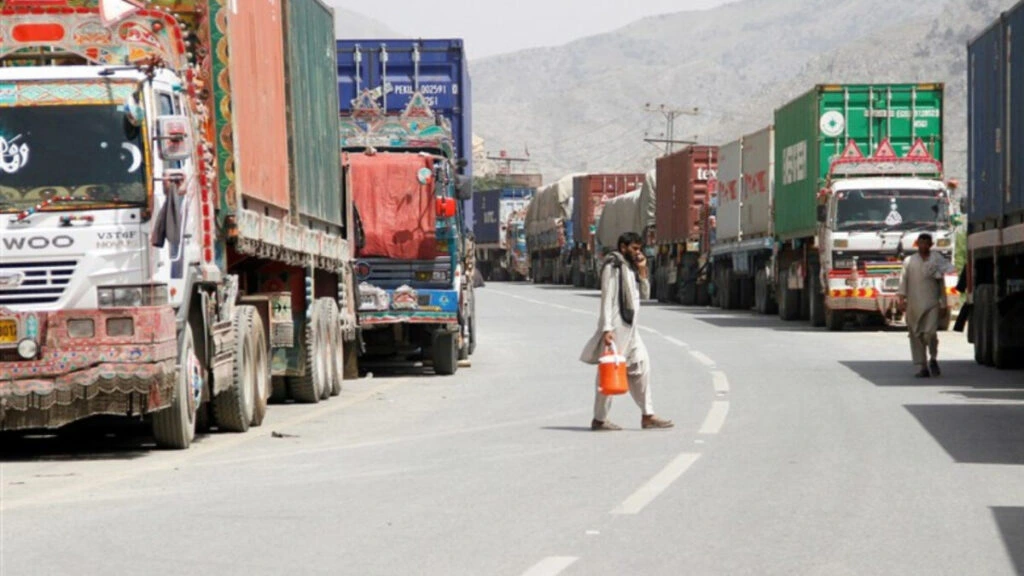
On 13-15 April 2026, tribal elders from Afghanistan’s Nuristan and Kunar provinces and Pakistan’s Chitral region held a tribal jirga between Nuristan, Kunar, and Chitral elders reopened the Barikot–Kamdesh route, ending a two-month closure, ending a nearly two-month closure that began on 26 February amid cross-border clashes and security disruptions.
The reopening of this key corridor linking Kamdesh and Barg-e-Matal in Afghanistan’s Nuristan province with Pakistan’s Chitral region has once again exposed the limited administrative reach of the Taliban in remote eastern border districts. The route had remained closed since late February due to escalating tensions along the frontier, cutting off essential civilian movement and disrupting fragile supply chains.
A recent OCHA report Humanitarian reports indicates that around 100,000 people in the Barg-e-Matal and Kamdesh districts have been cut off from humanitarian assistance since late February 2026. The residents have been facing acute food shortages and the flour has been unavailable in local markets. The blockade effectively isolated entire valley communities, turning localized insecurity into a sustained humanitarian disruption across one of Afghanistan’s most inaccessible regions.
The Reopening Agreement
Following two days of negotiations held on the Pakistani side of the border in Chitral, tribal leaders from Afghanistan’s Kunar and Nuristan provinces reached an understanding with Pakistani representatives. The agreement includes security assurances that no sabotage activity or cross-border firing against Pakistan will originate from Nari, Kamdesh, or Barg-e-Matal, alongside a clear contingency clause stating that the route will be immediately re-closed if any such violations occur. It also provides for the return of civilians from both sides, allowing residents of the Arandu sector in Pakistan and border villages such as Birkot and Dokalam in Afghanistan to return to their respective homes.
State Absence and Peripheral Governance Gaps
This event shows a structural limitation in Afghanistan’s current governance model. While the Taliban maintain centralized political authority in Kabul, their administrative capacity in peripheral districts such as Kunar and Nuristan remains weak and uneven.
During the two-month closure, local accounts suggest repeated appeals by tribal elders to provincial and central authorities, but limited institutional capacity to restore access or stabilize movement along the corridor. The governance in these regions continues to rely on informal structures rather than formal state systems.
Jirga as a Functional Substitute for State Mechanisms
A defining feature of the April 2026 development was the decisive role of tribal elders. The reopening was achieved through a jirga involving elders from Nuristan, Kunar, and Chitral, and the discussions were held outside formal state-to-state diplomatic channels, with elders acting as primary mediators between affected communities on both sides of the border.
The process highlights an increasingly visible governance pattern: in border districts where state response is delayed or absent, traditional mechanisms such as jirgas are performing functions normally associated with formal institutions
Pakistan’s Pragmatic Frontier Management
Pakistan’s role in enabling such local-level engagement reflects a sensible approach to frontier governance shaped by recurring instability along the border.
Pakistan has historically engaged tribal intermediaries to manage localized disruptions. In this case, such engagement facilitated rapid reopening of the corridor, preventing further deterioration of humanitarian conditions in already vulnerable districts.
However, Pakistan’s broader security concerns remain unchanged. The border region continues to be associated with militant infiltration risks, particularly involving the Tehreek-e-Taliban Pakistan (TTP). Islamabad’s approach therefore operates on a dual-track logic: maintaining humanitarian continuity through local mechanisms while pressing Kabul to improve border enforcement and prevent cross-border militancy.
Fragmented Authority in Eastern Afghanistan
Eastern Afghanistan continues to exhibit fragmented governance, like in Kunar and Nuristan provinces. Reports from the region suggest intermittent insecurity and shifting control dynamics even after the reopening, indicating incomplete administrative consolidation.
Governance in these districts is distributed among tribal elders, informal local actors, and localized security arrangements. This produces a hybrid authority structure in which the state exists formally but does not consistently function as the primary governing force at the local level.
Conclusion
The Barikot–Kamdesh reopening illustrates a central contradiction in Afghanistan’s post-2021 governance structure. While the Taliban maintain centralized political authority, their administrative reach in peripheral border regions remains shallow and inconsistent.
In the absence of timely institutional response, local actors i.e. tribal jirga structures, continue to perform essential governance functions, including crisis resolution and restoration of mobility.
This represents a a hybrid governance environment where authority is continuously negotiated between formal institutions and informal systems shaped by geography and necessity. Until administrative capacity is strengthened in Afghanistan’s border regions, such crises will continue to be resolved outside formal state frameworks, exposing governance gaps in Taliban rule











