
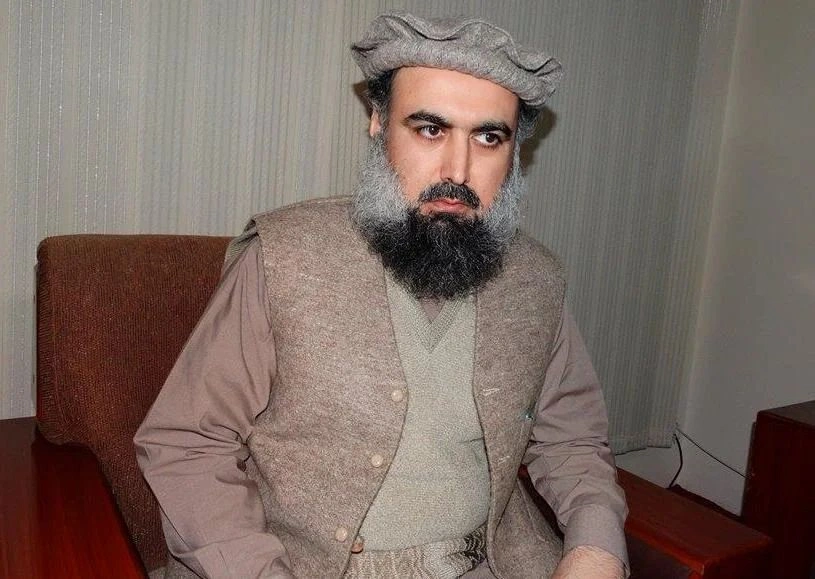
A security unit operating under the direct authority of Hibatullah Akhundzada carried out a highly sensitive operation in Kandahar on April 13, arresting Mutasim Agha Jan, a founding member of the Taliban and former finance minister. The arrest, executed by a special “dead squad” assigned to Akhundzada’s security, reflects growing mistrust within the Taliban’s top leadership. Mutasim Agha Jan’s political journey dates back to the early days of the movement, where he held key responsibilities during the era of Mullah Mohammad Omar. He later played a central role in reorganizing the Taliban after 2003 and was considered one of the most influential leaders, second only to Mullah Akhtar Mansour.
Exile and Return
Mutasim Agha Jan’s career has been marked by significant ups and downs. In 2012, after serious financial disputes with Mullah Akhtar Mansour, he survived an assassination attempt in Quetta, which forced him into exile. However, in 2023, under the patronage of Mullah Yaqoob, the son of Mullah Omar, he returned to Kabul and rapidly expanded his influence in Kandahar. The resources, armed backing, and political support he gained led to growing perceptions of him as a potential alternative to Hibatullah Akhundzada, raising concerns within the central leadership.
Motives Behind the Arrest
According to analysts, one key reason for Mutasim Agha Jan’s arrest may have been his proposal for a post-Eid ceasefire and a large gathering of religious scholars, which was viewed as a political challenge to the central leadership. This is not the first sign of internal divisions within the Taliban. In 2025, Sher Mohammad Abbas Stanikzai publicly criticized the ban on girls’ education as being against Islamic law and later relocated to the United Arab Emirates amid fears of arrest. These developments highlight deep ideological and policy disagreements within the movement.
Taliban Supreme Leader arrests his rival. In one of its kind operation the so called Dead Squad which also protects Mullah Haibatullah the Taliban Supreme leader hastily arrested Mutasim Agha Jan the former chief of staff and Finance Minister of Taliban founder and then Leader… pic.twitter.com/m8jVhM11NB
— BILAL SARWARY (@bsarwary) April 16, 2026
Human Rights Situation
Trends over the past five years indicate that the Taliban have adopted a systematic approach to controlling internal dissent and external opposition through arrests. Reports by the United Nations and Human Rights Watch reveal that more than 174 arrests were carried out in 2025 alone, while 282 individuals were detained in 2024 on charges of “links to opposition.” This crackdown has targeted not only political figures but also former Afghan officials, journalists, civil society activists, and ethnic and religious minorities.
Pressure on Media and Freedom of Expression
Media freedom in Afghanistan is also under severe threat. According to the Afghanistan Journalists Center, 34 journalists were arrested in 2025 and 205 violations against media were recorded. Notable detainees include Mansoor Nekmal, Saifullah Karimi, and analyst Javed Kohistani, whose repeated arrests have created an atmosphere of fear. Additionally, the prolonged detention of education activist Ahmad Fahim Azimi and the targeting of women over dress code regulations demonstrate that these actions extend beyond political circles to broader society.
Future Concerns
Within the government structure, non-transparent accountability practices continue, as seen in the April 2026 arrests of health ministry officials on corruption charges. Overall, the arrest of Mutasim Agha Jan appears to be part of a broader pattern in which the Taliban’s governance model relies on discretionary detentions, lack of transparency, and control through force rather than institutional processes. This situation indicates that the top leadership is consolidating its grip by weakening any force perceived as a political or ideological challenge.











