
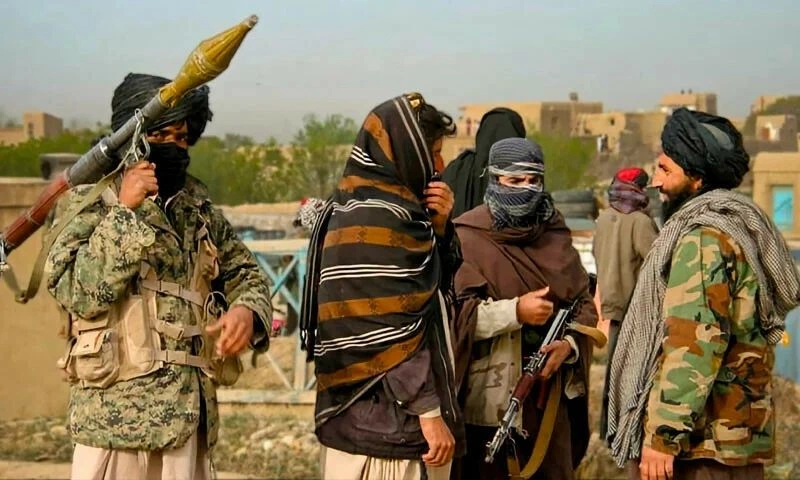
The arrest of a key commander of Fitna al-Khawarij, Aamir Sohail, also known as Maulvi Haider, by Pakistan’s security forces, along with his subsequent revelations, has reinforced concerns that Pakistan has long raised before the international community. Aamir Sohail admitted that he was trained in Afghanistan’s Paktika province under the full patronage of the Taliban regime and received financial support from India’s intelligence agency RAW. These disclosures expose a strategic nexus aimed at destabilizing Pakistan. This is not merely a militant’s statement but part of a broader body of evidence suggesting that Afghanistan has become a major safe haven for global terrorism.
While the Afghan Taliban publicly assure the international community that their territory will not be used against other countries, reports indicate that groups like Fitna al-Khawarij are being provided shelter, training, and logistical support. According to Aamir Sohail, the involvement of Afghan nationals within these groups and the coordination of cross-border attacks demonstrate a close link between the Taliban regime and such militant networks. This alleged alliance not only contradicts Islamic principles but also undermines relations with neighboring countries. The involvement of external funding, particularly from hostile agencies, further escalates risks to regional stability.
Global Acknowledgment
In response to these developments, Pakistan launched “Operation Ghazab Lil Haq,” which it describes as a necessary defensive measure. A recent report by the Washington Times supports Pakistan’s position, noting that its operations have targeted militant hideouts in Afghanistan with precision. The report also highlights minimal civilian casualties, which Pakistan presents as evidence of the professionalism and restraint of its armed forces. According to this narrative, Pakistan’s actions are focused on securing its territory and promoting regional stability rather than pursuing regime change.
Diplomatic and Military Strategy
Pakistan’s approach is not limited to military action but includes a broader framework combining diplomacy, political engagement, and economic measures. Coverage in international media suggests that Pakistan’s perspective is gaining wider recognition globally. Pakistan maintains that the future of Afghanistan should be determined by its own people, reflecting a policy of non-interference, while simultaneously emphasizing that it will not compromise on its own security.
The revelations by Aamir Sohail and the Washington Times report are being viewed as validation of Pakistan’s longstanding stance. Pakistan has called on the international community, particularly the United Nations, to take notice of militant safe havens in Afghanistan and the alleged role of external facilitators. While Pakistan asserts that it is fulfilling its responsibilities through ongoing operations, it maintains that lasting peace in the region will depend on Afghan authorities adopting a consistent and responsible approach and preventing their territory from being used by militant groups. Pakistan reiterates its commitment to continue efforts against Fitna al-Khawarij across all fronts.











